

Across European clinics, there are frozen embryos in storage that will never be used by the people who created them. Every IVF patient who finishes their family with embryos left over faces the same decision, and clinics rarely prepare them for it: keep paying storage fees, donate to research, allow the embryos to be discarded, or give them to someone else who wants to build a family.
That last option is embryo donation. On the receiving side, it’s among the least expensive and least medically invasive routes to pregnancy available in Europe, and as well, one of the most misunderstood.
It’s also one of the most jurisdiction-dependent. Whether embryo donation is legal, whether donors can be anonymous, and whether a single woman or a same-sex couple can access it at all depends entirely on which country you’re standing in. This post covers what the procedure involves, where in Europe it’s permitted, what it costs, what actually drives success rates, and how the anonymity question shapes decisions you’ll be living with for decades.
What Embryo Donation Actually Is (And Isn’t)
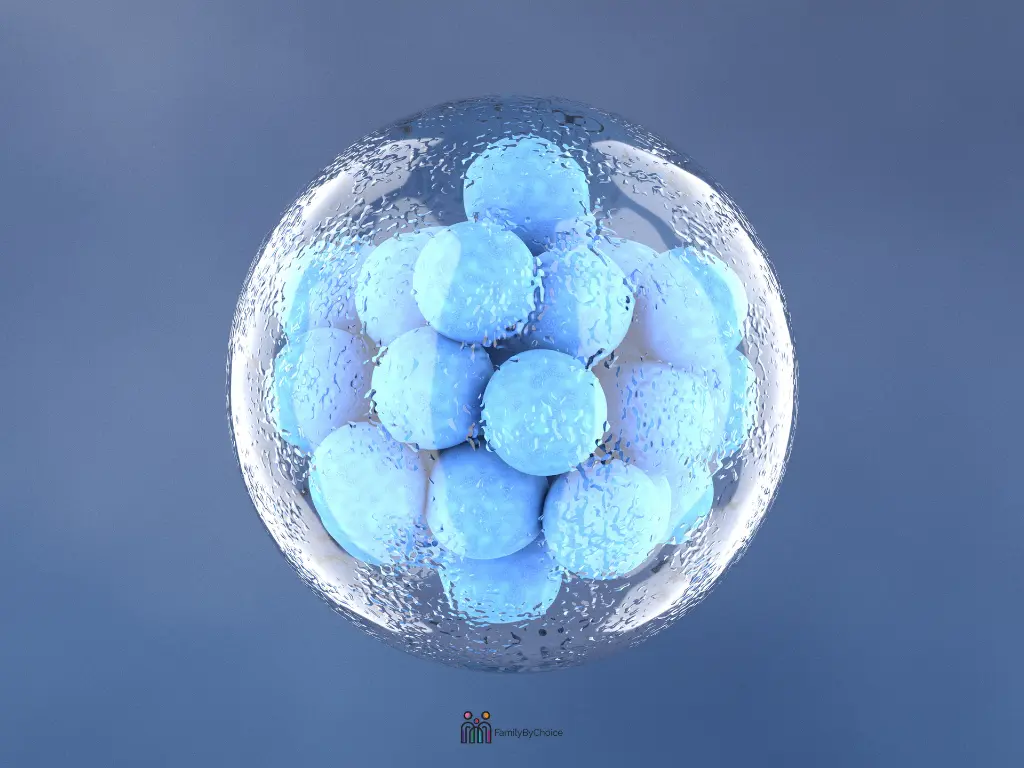
Embryo donation is the transfer of embryos created during one person’s or couple’s IVF cycle to someone else who will attempt pregnancy with them. The recipient undergoes a frozen embryo transfer. Usually, that means no ovarian stimulation, no egg retrieval, no anaesthesia. The embryos are thawed and transferred to a prepared uterus.
The resulting child is not genetically related to either parent raising them. But the recipient carries the pregnancy, gives birth, and in most European jurisdictions is the legal mother from the moment of birth by virtue of having given birth.
How it differs from donor egg IVF. With donor egg IVF, embryos are created for you from a donor’s eggs and your partner’s or a donor’s sperm. With embryo donation, the embryos already exist. That’s why the cost difference is so large: the expensive part has already been paid for by someone else. Structurally it’s closest to double donation, except the embryos weren’t made to your specification.
How it differs from adoption. You’ll occasionally see the phrase “embryo adoption,” mostly imported from American faith-based programmes. In European law, that’s inaccurate. Embryos are not legal persons in any European jurisdiction that permits donation; they’re transferred under contract and clinic regulation, not adoption law. No court terminates parental rights, because none exist. No home study is required.
This matters practically for anyone who has encountered US-based material: the screening hurdles those programmes impose, like home visits, references, marital status requirements, are institutional policy, not law.
European clinics generally don’t operate this way, though they do apply their own eligibility rules, which vary considerably by country.
Who Embryo Donation Is For
People facing infertility on both sides: When egg quality and sperm quality are both factors, donor embryos address both in one step.
People after repeated IVF failure: If several cycles with your own gametes haven’t worked, donor embryos offer a reset with material of demonstrated viability. If you’re at that point, our guides on your real options after failed IVF and knowing when to consider donor eggs cover the surrounding decisions.
Single women: Access varies sharply by country, this is one of the places where jurisdiction matters most, covered in detail below.
LGBTQ+ families: For female couples where neither partner can use their own eggs, donor embryos avoid the cost of sourcing both eggs and sperm. One partner still carries. If you’re comparing routes, our overview of LGBTQ+ paths to parenthood and our reciprocal IVF guide set out the alternatives. Note that several countries permitting embryo donation restrict it to heterosexual couples.
Anyone avoiding ovarian stimulation: Medical contraindications, poor tolerance of stimulation drugs, or simple preference. FET requires only endometrial preparation.
People for whom cost decides it: This is an honest and legitimate reason.
Worth rejecting: the framing of embryo donation as a last resort. Some people choose it first, having weighed genetics against cost, medical burden and timeline. That’s a considered decision, not a compromise.
If You’re the One Donating
If you have embryos remaining and are weighing donation, expect it to be harder than it sounds. You may have thought of these embryos as future children for years. Donating them means a child genetically related to you, and possibly to children you’re already raising, will be raised by someone else.
If you’re still in the storage phase, our post on embryo banking explains what your ongoing options look like.
There’s no correct answer, and taking a long time is normal. Counselling with someone experienced in reproductive decisions is worth it even if you think you know what you want.

Where Embryo Donation Is Legal in Europe
This is the section to read first, because it determines whether the rest applies to you.
Embryo donation is prohibited in Germany, Austria, Switzerland and Norway, and heavily restricted in Italy. Residents of these countries who want donor embryos travel, which is legal for the patient, though the specifics of bringing a pregnancy home vary and are worth taking advice on.
Where it is permitted, European countries split into two camps, and the split matters more than almost anything else in this article.
Anonymous donation countries
Czech Republic: Donation is anonymous by law. Neither donor nor recipient may learn the other’s identity, and the child has no route to identifying information at any age. Clinics provide non-identifying donor characteristics. Access is generally restricted to heterosexual couples; single women and female couples are not eligible under Czech law. Strong clinic infrastructure, well-established international patient services, and among the more affordable options in Europe.
Spain: Also anonymous by law, with donor selection made by the clinic on the basis of physical and immunological matching; recipients don’t choose. Spain permits treatment for single women and female couples, making it the most accessible of the anonymous-donation countries for LGBTQ+ and solo parents. Large donor pools and extensive experience with international patients.
Greece: Anonymous, with an active international patient sector and legislation that has generally been welcoming to non-residents. Single women are permitted. Age limits for recipients apply and have been subject to revision, so confirm the current threshold.
Ukraine: Anonymous donation is permitted and costs are low, but the war has fundamentally changed the practical picture for international patients. Some clinics continue to operate, and some have relocated operations. Anyone considering Ukraine needs current, specific information rather than pre-2022 assumptions.
Identity-release countries
In these countries, anonymous donation is prohibited. Donors consent to their identity being released to the donor-conceived person, typically at 16 or 18. The donor has no parental rights or obligations. This is about the child’s access to information, not legal parenthood.
United Kingdom: Donor-conceived people can request identifying donor information at 18 through the HFEA register. The regulatory framework is among the most developed in Europe, but donor embryo availability is limited and waiting lists can be long. Single women and female couples have full access.
Netherlands, Sweden, Finland: All operate identity-release systems with donor registers. Access rules for single women and same-sex couples are generally permissive, though details differ. Donor shortages are a recurring issue across all three, which affects availability of donated embryos specifically.
Portugal: Anonymity was struck down by the Constitutional Court, moving Portugal to identity-release. The transition created significant disruption to donor supply. Confirm current availability before planning treatment there.
Choosing between the two models
This isn’t only a legal question, it’s a decision about your future child.
Anonymous jurisdictions offer larger donor pools, shorter waits and lower costs. Identity-release jurisdictions offer your child a route to information about their genetic origins.
There’s a complication that makes the choice less clean than it looks. Consumer DNA testing has made genetic anonymity practically unenforceable regardless of what any law says. A donor-conceived adult in Prague or Madrid who takes a commercial DNA test may well identify genetic relatives, and through them the donor. The legal guarantee of anonymity increasingly describes what a clinic will tell you, not what your child will be able to discover.
Many prospective parents now weigh this differently than they would have a decade ago. Not because they want contact, but because they’d rather their child find information through an expected channel than an unexpected one.
Cross-Border Treatment: What It Actually Involves
If you’re travelling for treatment, the logistics matter as much as the law.
Residency and eligibility: Most permitting countries treat international patients on the same terms as residents, but eligibility rules like marital status, sexual orientation, age limits, apply to you as they would to a citizen. A single woman cannot access donor embryos in the Czech Republic regardless of where she lives.
Number of trips: Typically two: an initial consultation and screening visit, then the transfer itself. Some clinics will accept screening results and monitoring scans from your home country, reducing it to one trip. Ask early, because it substantially affects cost and time off work.
Home country monitoring: You’ll need a local clinic or gynaecologist willing to conduct endometrial monitoring during preparation and communicate with the treating clinic. Arrange this before you commit.
Legal parentage at home: For a woman who gives birth, parentage is usually straightforward across Europe. It’s less automatic for a non-carrying partner, particularly a same-sex partner, and particularly if your home country doesn’t recognise the arrangement that produced the pregnancy. Take advice in your own jurisdiction, not just the treatment country’s. Our guide to legal parentage covers the principles, and the course on navigating the legal maze of international family building goes further. For the wider picture of how European jurisdictions differ, see our overview of European laws for LGBTQ+ couples and single parents.
Embryo shipping: If embryos are stored in one country and you’re treating in another, they can usually be moved, but both clinics must agree, both countries’ regulations must permit it, and you need a specialist cryoshipping company. Establish liability in writing before anything is packed.
What Donor Embryo Transfer Usually Costs in Europe?
Estimates of ranges per transfer, excluding travel:
| Country | Typical range per transfer |
| Czech Republic | €2,500 – €4,500 |
| Greece | €3,000 – €5,000 |
| Spain | €3,500 – €6,000 |
| UK | £4,000 – £7,000 |
| Netherlands / Nordics | €4,000 – €7,000 |
For comparison, donor egg IVF in the same countries typically runs €6,000–€12,000, and a full own-egg IVF cycle €4,000–€8,000 before medications.
Frequently excluded from quoted prices:
- Medications for endometrial preparation (€400–€900)
- Pre-treatment screening, in either country
- Monitoring scans at home
- Travel and accommodation for two trips
- Embryo shipping, if applicable (€800–€2,500 within Europe)
- Storage of any embryos you don’t use
- Translation or apostille of documents
What to do?
- Ask for an itemised quote.
A €3,000 headline with six exclusions can land above a €5,000 inclusive package. The same gap between quoted and real prices runs through fertility treatment generally. Our breakdown of egg freezing costs shows the pattern. - Do research on public funding.
A few countries provide partial reimbursement for donor treatment for residents, generally with age limits and cycle caps. Cross-border treatment is rarely reimbursed. Check your national scheme rather than assuming.
Success Rates and What Actually Drives Them
The point most articles miss: your age has very little to do with your chances.
What predicts the outcome is the age of the woman who provided the eggs, at the time the embryos were created. A 44-year-old recipient carrying an embryo made from a 28-year-old’s eggs has outcomes far closer to a 28-year-old’s than to her own age group. Uterine receptivity declines with age far more slowly than egg quality does.
Live birth rates per donor embryo transfer in European clinics generally fall in the 30–45% range, but that figure conceals enormous variation, and clinic-published statistics are easy to misread. Our guide to reading IVF success rates explains what per-transfer, per-cycle and per-patient numbers actually mean – the distinction matters more here than almost anywhere, because a clinic quoting per-transfer rates on a single available embryo is describing a very different proposition than one quoting cumulative rates across a cohort.
What genuinely drives outcomes:
Blastocyst or day-3: Blastocysts have cleared a developmental hurdle many day-3 embryos never would. Materially higher implantation rates.
Embryo grade: You’ll get grading information in the profile, and it’s easy to over-read. Our post on what your embryo’s grade actually means covers how much weight to give it.
Genetic testing: Many donated embryos predate routine PGT-A, particularly older ones. An untested embryo isn’t a poor embryo, it’s an unknown one. To understand what testing does and doesn’t establish, start with the science behind embryo screening.
Freezing method: Vitrification is now standard and produces markedly better thaw survival than the slow-freeze method used before roughly 2010. Embryos frozen a decade or more ago may have been slow-frozen, so you will need to ask. Our comparison of fresh vs. frozen donor eggs covers the same cryobiology.
Cohort size: One embryo means one attempt. Four means you can try again without re-entering the matching process. This affects your actual chance of a baby far more than per-transfer statistics suggest.
Your endometrium: The part that is genuinely about you, whether your lining develops adequately, and whether structural issues need addressing first.
Considerable folklore surrounds what happens in the laboratory. Our piece on common myths about the IVF lab separates the real variables from the noise.
The Process, Step by Step
- Counselling. Required in most European jurisdictions, and genuinely useful rather than a formality.
- Choosing a clinic and country. Driven by legal eligibility first, then anonymity model, cost, availability and travel.
- Screening. Uterine evaluation (saline sonogram or hysteroscopy), hormonal panel, infectious disease testing per EU Tissues and Cells Directive requirements.
- Matching. You review what the jurisdiction permits — in Spain, the clinic matches for you; in the Czech Republic and Greece, you typically see non-identifying characteristics. Many of the questions worth asking when selecting a donor transfer directly to embryo profiles.
- Consent and contracts. Clinic consent forms plus, where relevant, independent legal advice, particularly for cross-border arrangements or non-carrying partners.
- Shipping, if the embryos are stored elsewhere.
- Endometrial preparation. Medicated or natural cycle, monitored at home, with results sent to the treating clinic. Our full walkthrough of the FET process covers both protocols.
- Transfer and beta hCG. The transfer takes minutes, no anaesthesia. Blood test nine to eleven days later.
If you’re curious what happens on the other side of the lab door during thaw and transfer, Behind Lab Doors walks through it with embryologists.
Questions to Ask Any Clinic
- Am I eligible here given my relationship status and age?
- Is donation anonymous or identity-release in this country, and what will my child be able to learn?
- How old are the embryos, and were they vitrified or slow-frozen?
- Blastocyst or day-3, and what grade?
- PGT-A tested?
- How many embryos come with a match, and can I use them across multiple transfers?
- How many trips will I need, and what can be done at home?
- Total cost including medications, screening, shipping and storage?
- What happens to embryos I don’t use?
- Is counselling included?
- Will you communicate directly with my home clinic during monitoring?
For the broader clinical conversation, our list of questions to ask your fertility doctor covers ground this one doesn’t.
Is This Right for You?
Only you can answer that, and the honest answer often contains some grief.
Most people considering donor embryos are letting go of something – a genetic connection, a resemblance, a sense of biological continuity. That loss is real and doesn’t need to be fully resolved before you proceed. People who felt genuine sadness about it have built families they wouldn’t trade for anything. Feeling the loss and wanting the child aren’t in conflict.
What’s worth resisting is any hierarchy of family-building routes. Donor embryos aren’t a lesser IVF. Carrying a pregnancy isn’t a lesser genetic parenthood, and genetic parenthood isn’t superior to anything. These are different roads to the same destination, with different costs, different medical demands, and different things you carry.
If this path interests you, the next step is specific information: which countries you’re eligible in, what’s actually available there, and what your own medical situation allows.
Want to go deeper?
Our course The Gift of Life: Starting Your Journey with Egg Donation covers donor conception from the inside. The medical process, choosing a clinic and country, legal considerations across European jurisdictions, and the emotional terrain clinics rarely discuss.
You’ll hear from:
- Olga Pysana, co-founder of Family By Choice and independent international surrogacy consultant, with over seven years guiding intended parents through cross-border family-building.
- Martin Muderka, MD, PhD, gynaecologist and reproductive medicine specialist at ReproGenesis, with clinical and academic expertise in infertility, cervical disease and advanced prenatal screening.
- Anisa Ajdini, MD, medical Director and fertility specialist, combining reproductive medicine, IVF and advanced gynaecological care.
- Eser Ağar, MD, specialist in Obstetrics and Gynaecology with more than 20 years of clinical experience in infertility care.
Laws, costs and clinical practice vary by country and change. This article is educational and isn’t a substitute for advice from your own medical and legal professionals in both your home country and any treatment country.
Author

Related Courses:
Online Course: The Gift of Life: Starting Your Journey with Egg Donation
Related articles:
Embryo Banking Explained: What It Is, When It Happens, and Why It Matters for Your Journey