
You were probably taught one version of this.
A 28-day cycle. Ovulation on day 14. Maybe a diagram in a school textbook, drawn with the confidence of something that applies to everyone. And for years, the whole conversation was about how not to get pregnant.
Then you decide you want a baby, and suddenly the details matter. Which days count? Is the app right? Why does the ovulation test say one thing and your body another? Why hasn’t it happened yet, when you’ve been “timing it” every month?
If you feel unsure, you are in very large company. In a UK study of more than 97,000 women actively trying to conceive, 41% could not correctly identify their fertile window. The gap was widest among younger women, women with irregular cycles, and, painfully, those who had been trying the longest. In an Australian study of women attending fertility clinics, 68% believed they had been timing sex within their fertile days, but only 12.7% could accurately say when those days were.
This isn’t a personal failing. It’s an education gap, and it’s one that almost nobody fills before you need it.
This guide is our attempt to fill it properly. It covers what actually happens in your body across a cycle, what the research says about the fertile window (with real numbers, not vague reassurance), how every popular tracking method performs when it’s tested, why UK and US advice sometimes sounds contradictory, and what changes if you’re conceiving with donor sperm. We’ll also be honest about where the evidence is strong and where it’s thin.
Take your time with it. You don’t need to absorb it all at once.
First, the short version
If you read nothing else, read these three points. Everything below explains them.
- Your fertile window is six days long, and it ends on the day you ovulate. Sperm can survive in the female reproductive tract for several days, while the oocyte remains fertilisable for a much shorter period, generally around 12 to 24 hours after ovulation. So the days before ovulation matter at least as much as, and often more than, ovulation day itself.
- Ovulation moves. It moves between people and, for many, from one cycle to the next. A date on a calendar is an estimate, never a guarantee.
- Your body gives better signals than your calendar. Changes in cervical mucus and a rise in luteinising hormone (LH) track your actual cycle. A prediction based on last month’s dates does not.
Your cycle, properly explained
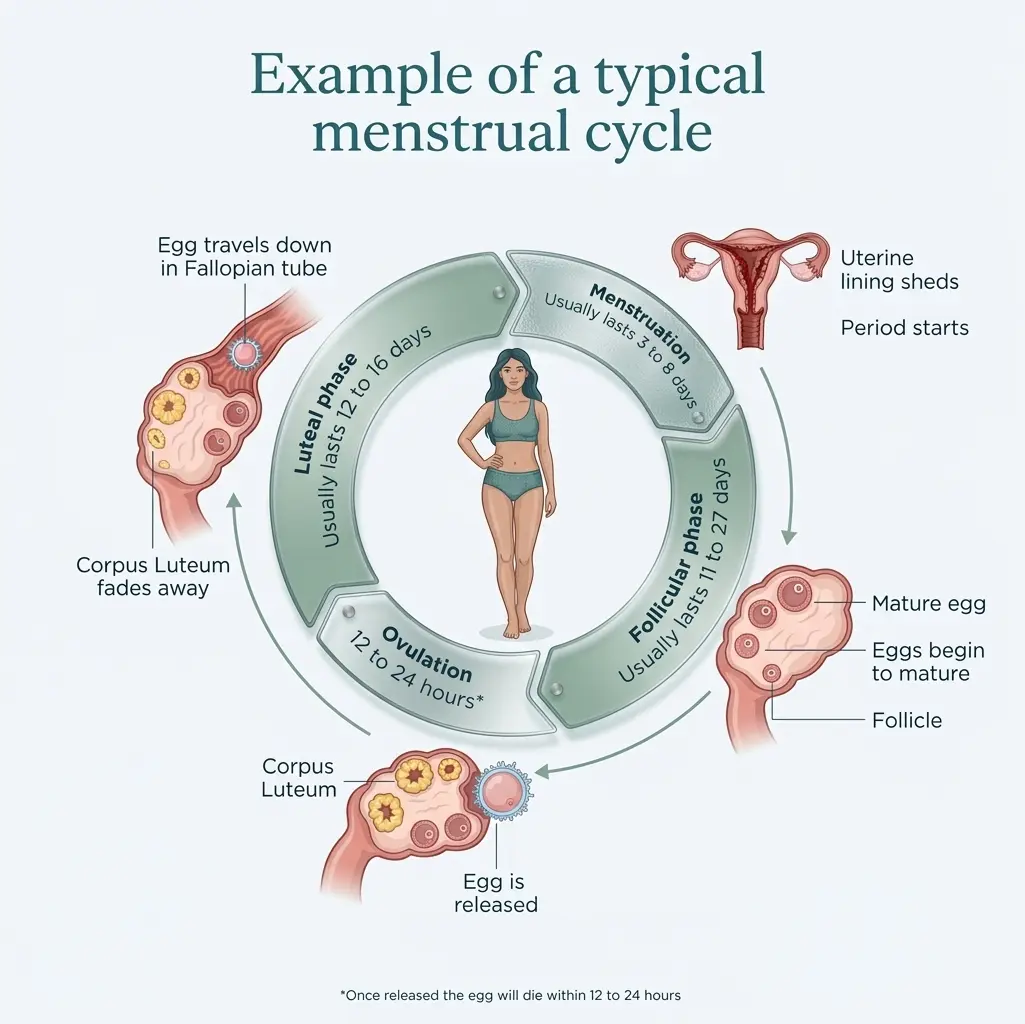
The menstrual cycle is a conversation between your brain (the hypothalamus and pituitary gland) and your ovaries, carried by hormones. Day 1 is the first day of full, red bleeding, not spotting. The cycle ends the day before your next period starts.
Doctors usually split the cycle in two halves, divided by ovulation: the follicular phase before it, and the luteal phase after it. Your period sits at the start of the follicular phase.
The follicular phase: choosing an egg
The follicular phase: choosing an egg
As your period begins, oestrogen and progesterone are low. The pituitary gland responds by releasing follicle-stimulating hormone (FSH). FSH recruits a small group of follicles, the fluid-filled sacs in the ovary that each contain an immature egg.
Usually one follicle outgrows the rest and becomes dominant. As it grows, it produces more and more oestrogen (oestradiol). That rising oestrogen does three important things:
- it thickens the lining of the uterus (the endometrium), preparing it for a possible embryo
- it changes cervical mucus from sticky or dry to wetter, clearer and more slippery, which helps sperm survive and swim
- once it stays high for long enough, it signals the brain to release a large burst of LH
This phase is the one that varies most. A stressful month, illness, travel or a change in weight can delay the dominant follicle, and with it, ovulation.

The LH surge and ovulation
The LH surge is the physiological trigger for ovulation. It causes the oocyte to complete maturation and the dominant follicle to rupture. The interval is variable: depending on how the surge is defined and measured, ovulation generally occurs within roughly the next two days after the urinary LH surge is detected. This is why an LH test predicts that ovulation is approaching rather than pinpointing its exact hour.
The surge itself is far less tidy than most diagrams suggest. A study of daily urine samples from 46 women with regular cycles found that:
- the surge started on average on day 14.5, but anywhere from day 9 to day 26
- in 42.9% of cycles the surge began within a single day; in 57.1% it built up gradually over two to six days
- the shape varied too: a single spike in 41.9% of cycles, two peaks in 44.2%, and a plateau lasting several days in 13.9%
- three of the 46 women had no detectable surge at all in that cycle
The researchers’ conclusion was that LH surges leading to ovulation are extremely variable. This matters when you use ovulation tests, which we’ll come back to.
The luteal phase: preparing for implantation
After ovulation, the empty follicle turns into the corpus luteum, a temporary gland that produces progesterone. Progesterone stabilises the uterine lining so an embryo can implant, thickens cervical mucus again, and raises your resting body temperature slightly.
If no pregnancy occurs, the corpus luteum regresses during the luteal phase, progesterone falls, and menstruation begins. In many ovulatory cycles the luteal phase is around 12 to 14 days, although normal variation exists. If an embryo implants, trophoblastic cells begin producing hCG, which supports the corpus luteum in early pregnancy; hCG is also the hormone detected by pregnancy tests.
The luteal phase is usually more stable than the follicular phase, though not perfectly so. In an analysis of more than 600,000 cycles tracked in an app, the luteal phase averaged 12.4 days (typical range 7 to 17), while the follicular phase averaged 16.9 days but ranged from 10 to 30. The study was funded by Natural Cycles, the app company, but its findings are consistent with earlier clinical research.
| Phase | Main hormones | What is happening | What you may notice |
| Menstruation (start of follicular phase) | Oestrogen and progesterone low; FSH rising | Uterine lining sheds; follicles begin to grow | Bleeding for about 4 to 8 days |
| Late follicular phase | Oestrogen rising | Dominant follicle grows; lining thickens | Mucus becomes wetter, clearer, more slippery |
| Ovulation | LH surge | Egg is released | Stretchy, egg-white mucus; positive LH test; some feel one-sided twinges |
| Luteal phase | Progesterone high | Lining prepares for implantation | Mucus dries up; resting temperature rises slightly |
What counts as a “normal” cycle?
The old textbook range was 21 to 35 days. The International Federation of Gynecology and Obstetrics (FIGO) has since updated it, using large population studies. For people aged 18 to 45, FIGO defines normal cycle frequency as 24 to 38 days. Cycles shorter than 24 days are called “frequent” and longer than 38 days “infrequent”.
Regularity has its own definition. Your cycle counts as regular if the difference between your shortest and longest cycle is 7 days or less between the ages of 26 and 41, or 9 days or less between 18 and 25 and between 42 and 45. So a cycle that runs 27 days one month and 32 the next is still regular. A normal period lasts up to 8 days.
FIGO is also clear that people with infrequent or irregular periods should be assessed for an ovulatory disorder. That isn’t a reason to panic, but it is a reason not to wait a full year before asking questions (more on that below).
Regular periods don’t prove you ovulated
This surprises many people. Bleeding can occur without ovulation. In an anovulatory cycle there is no normal corpus-luteum progesterone phase; continued or fluctuating oestrogen stimulation can make the endometrium unstable and lead to irregular shedding. This is anovulatory bleeding and it can sometimes resemble a menstrual period.
In women with regular periods and no known fertility problems, studies estimate that between 1% and 14.5% of cycles are anovulatory, depending on how ovulation was measured. The same research team then modelled what this means for conception. Their simulation found that an occasional anovulatory cycle is not an important factor in how long it takes regularly menstruating women to get pregnant.
So one odd cycle is normal. A pattern of cycles with no sign of ovulation is worth investigating.
The fertile window, in numbers
Most of what we know about the fertile window comes from a small number of carefully designed studies. They are worth knowing by name, because nearly every app and article you read is quietly built on them.
Six days, ending on ovulation
In the early 1980s, researchers in North Carolina followed 221 healthy women who had just stopped contraception to try for a baby. Each woman collected a urine sample every day and recorded when she had sex. By measuring hormone breakdown products in the urine, the team could pinpoint ovulation in each cycle.
The results, published in the New England Journal of Medicine in 1995, covered 625 cycles and 192 pregnancies. Conception happened only when sex took place in a six-day window ending on the day of ovulation. The chance of conceiving rose from 10% for sex five days before ovulation to 33% for sex on the day of ovulation itself. Only 6% of pregnancies could be firmly traced to sperm that were three or more days old.
Later statistical reanalyses, combining this data with an older study and correcting for errors in pinpointing ovulation, confirmed the same six-day window. Several analyses since have suggested that the single best day may be one or two days before ovulation rather than the day itself. Either way, the practical message is identical: the best chances come from sex in the days leading up to ovulation.
How age changes the numbers
A 2002 study of 782 couples and 5,860 cycles asked whether the fertile window changes with age. It found no evidence that the window gets shorter in older women or men. What changes is the chance of conceiving on each of those days. Day-specific probabilities of pregnancy were about twice as high for women aged 19 to 26 as for women aged 35 to 39. Once the woman’s age was accounted for, fertility was also significantly lower when the male partner was over 35.
In other words, the window stays the same size as you get older. The odds on each day within it get smaller, which is why timing and earlier investigation matter more in your late 30s.
Your cervical mucus may be the best predictor of all
One of the most striking findings in this field is how much cervical mucus tells you. A 2004 study of 782 women and 7,288 cycles scored mucus quality daily on a scale of 1 to 4. The chance of conception rose steeply with mucus quality. Once the researchers took mucus quality into account, the timing of sex within the fertile window mattered much less. Their conclusion was that sex should happen on days with the best mucus, regardless of the exact timing relative to ovulation.
A 2006 analysis put numbers on it. The probability of conception was 0.3% on days with no noticeable secretions and close to 30% on days with the most fertile-type mucus, whatever the cycle day. That’s a powerful, free signal most people have never been taught to read.
Why “ovulation on day 14” is a myth
Day 14 is not wrong because doctors made a mistake. It’s an average from a textbook 28-day cycle that was never meant to describe any individual person. The problem is that it has been repeated so often that it now sounds like a rule.
Here is what the research shows instead:
- Few cycles are exactly 28 days. In the 600,000-cycle app analysis, only 13% of cycles were exactly 28 days long.
- The fertile window can fall almost anywhere. Using the North Carolina data, researchers published day-by-day estimates in the BMJ. On every day between day 6 and day 21, women had at least a 10% chance of being in their fertile window. Only about 30% of women had their fertile window entirely within days 10 to 17, the range often quoted in clinical guidelines. Some women were still potentially fertile in the fifth week of the cycle.
- Most people guess their own ovulation day wrong. In a study of women who later became pregnant, only 12.7% correctly estimated their ovulation day. The most common guesses were day 14 (35.5%) and day 15. Just 55% of the guessed days even fell within the woman’s actual fertile window.
- Cycles shift with age. In the app analysis, average cycle length fell by about 0.18 days per year between the ages of 25 and 45, driven mainly by a shorter follicular phase. Your cycle at 38 may not look like your cycle at 28.
If you’ve been timing sex around day 14 and it hasn’t worked, the problem may be the calendar, not your body.
Every way to track your cycle, honestly assessed
There is no perfect method. Each one measures a different thing, at a different moment, with different blind spots. Knowing what each method actually measures is the key to using it well.
Calendar methods and period-tracking apps
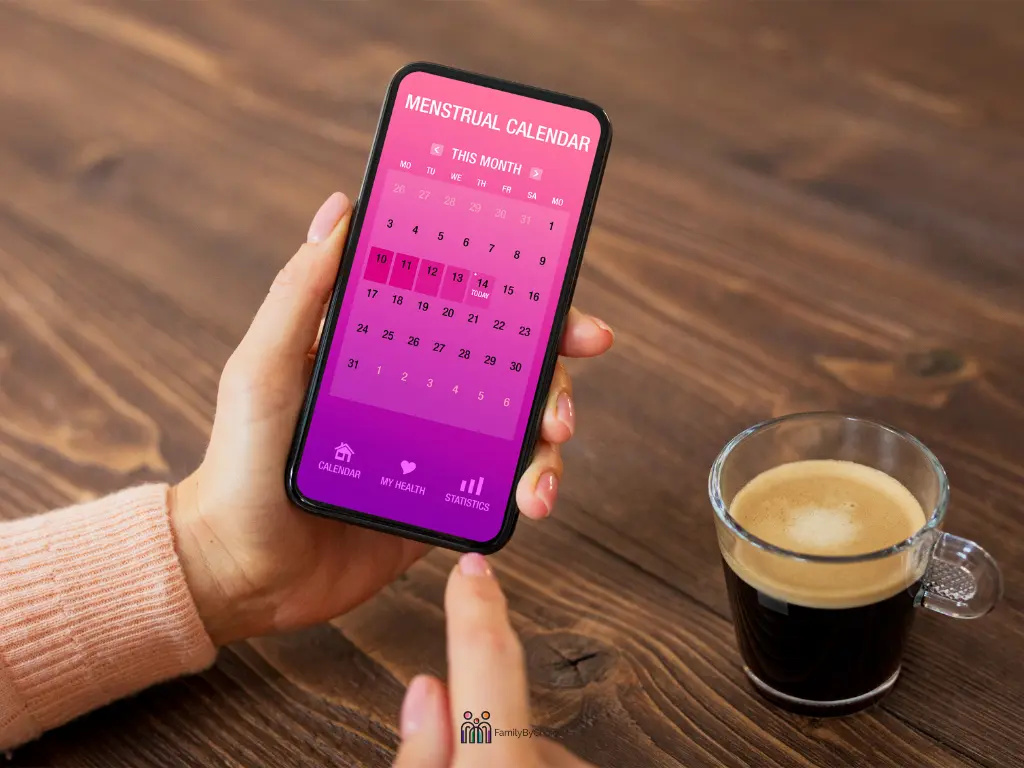
Most apps predict your fertile window from the dates you enter. That can be a useful diary, but prediction is not detection. A 2018 study of cycle apps found that few disclosed how they calculate fertile days, and some simply assume a 28-day cycle with ovulation on day 14. In a summary of that research, apps predicted the actual ovulation day correctly only 33% to 43% of the time.
Newer data is even more telling. A 2026 analysis of 543,167 cycles compared app predictions with LH test results. Calendar-based tracking labelled at least one truly fertile day as “not fertile” in 67% of cycles, and in 25% of cycles it missed at least one of the highest-risk days. Irregular cycles made errors much more common. Apps that also used temperature data did better, but still missed fertile days in 41% of cycles.
Our view: apps are good for logging. They should not be the only thing you rely on to decide when to try.
Cervical mucus
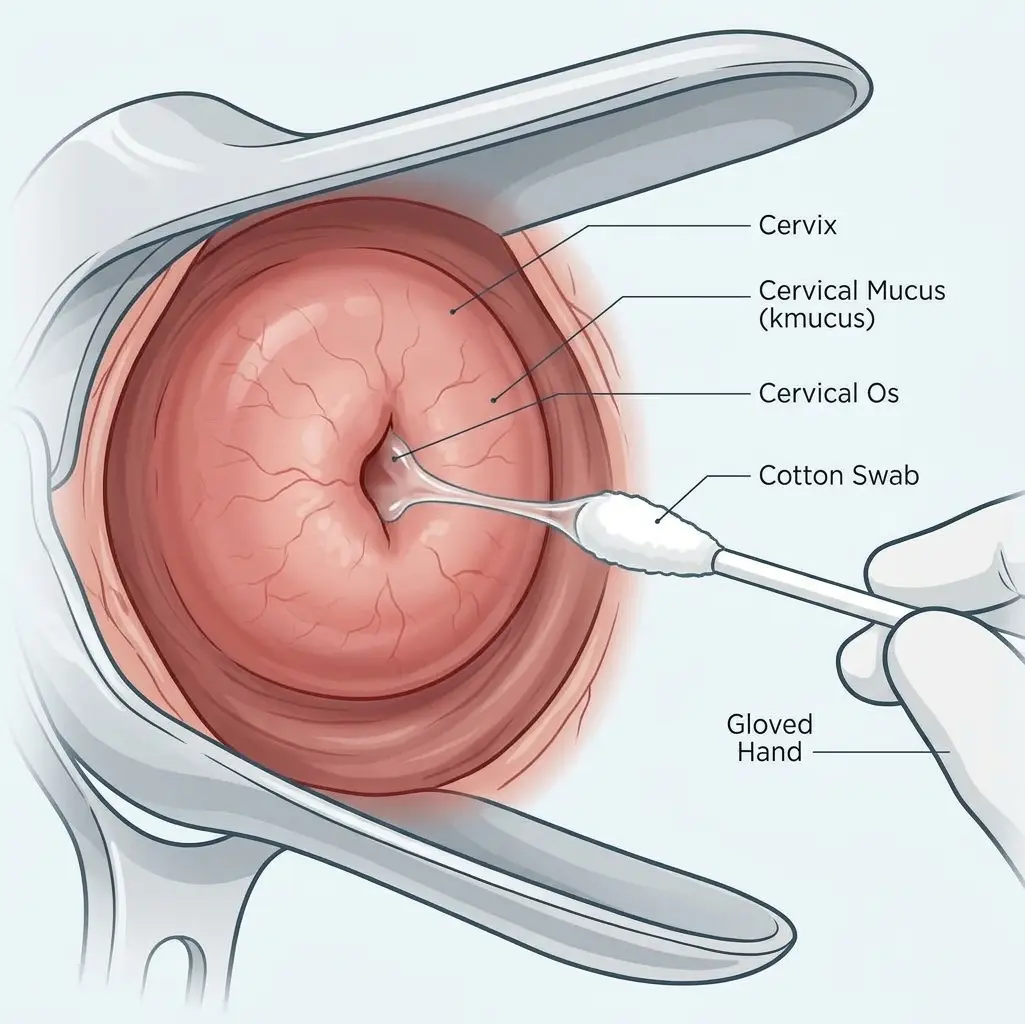
As oestrogen rises before ovulation, mucus changes from dry or sticky to creamy, then to wet, clear and stretchy, often compared to raw egg white. After ovulation, progesterone makes it thick or dry again. As the studies above show, the best-quality mucus coincides with the highest chance of conception.
Mucus observation is free and it signals the fertile window before ovulation, which is exactly when you need to know. It does take two or three cycles to learn, and it can be harder to read with vaginal infections, some medications, lubricants, or after recent sex. Fertility-friendly lubricants are available if you need them.
Ovulation (LH) tests
Ovulation predictor kits detect LH in urine. A positive result means a urinary LH surge has been detected, and ovulation will often follow within roughly the next two days, although the interval varies. For people trying to conceive, the day of the first clear positive result and the following day are therefore useful days to include, rather than waiting for a presumed exact moment of ovulation.
A WHO-commissioned systematic review found that home ovulation tests may improve the chances of pregnancy, with no meaningful increase in stress or anxiety, and high satisfaction among users. The evidence base was small, though, and at high risk of bias.
Three limits are worth knowing:
- The surge varies. As the urine study above showed, many surges build gradually or have two peaks. Testing once a day at the same time, and not stopping at the first faint line, reduces the chance of missing it.
- A positive test doesn’t prove ovulation. It shows the trigger, not that the egg was released.
- PCOS can mislead the test. Many people with polycystic ovary syndrome have persistently raised LH, which can produce positive results on many days of the cycle, or hide the real surge. If your tests are positive for days on end, speak to a doctor.
Basal body temperature (BBT)
After ovulation, progesterone raises your resting temperature slightly and keeps it raised until your next period. Taking your temperature every morning before getting up can show that shift.
The catch is timing. The rise appears only after ovulation, when the fertile window has already closed. So BBT can’t tell you when to try; it can only confirm, in hindsight, that you probably ovulated and how long your luteal phase was. Readings are easily affected by poor sleep, illness, alcohol and shift work. The UK’s NICE guideline specifically advises doctors not to use BBT charts to confirm ovulation.
Wearables
Rings, watches and bracelets now estimate ovulation from overnight skin temperature and sometimes heart rate. The data is more promising than you might expect. A 2025 validation study of the Oura Ring, checked against LH tests, detected 96.4% of ovulations with an average error of about 1.3 days, and performed far better than the calendar method, including in irregular cycles. It was written by Oura’s own scientists, and it only included cycles in which ovulation happened. A 2025 review and meta-analysis of wearable devices found a pooled accuracy of 88%.
Like BBT, wearables mostly confirm ovulation after it happens. Their strength is building a picture of your pattern over months without the daily effort of a thermometer.
Clinical confirmation
If you need certainty, a clinic can provide it. NICE recommends a blood test for progesterone in the mid-luteal phase (around day 21 of a 28-day cycle, or about seven days before an expected period) to confirm ovulation. Ultrasound follicle tracking can show a follicle growing and then collapsing after ovulation. These are the methods clinics use when timing matters most, for example before insemination.
| Method | What it measures | Tells you before ovulation? | Main limit |
| Calendar or app | Past cycle dates | Estimate only | Often misses fertile days, especially with irregular cycles |
| Cervical mucus | Rising oestrogen | Yes, several days ahead | Takes a few cycles to learn |
| LH tests | The LH surge | Yes, about 1 to 2 days ahead | Variable surges; can mislead with PCOS |
| Basal body temperature | Post-ovulation progesterone | No, afterwards only | Disrupted by sleep, illness, alcohol |
| Wearables | Skin temperature, heart rate | Mostly afterwards | Proprietary algorithms; limited independent data |
| Blood test or ultrasound | Progesterone; follicle growth | Ultrasound yes; blood test afterwards | Needs a clinic |
Why UK and US advice sounds so different
If you read widely, you’ll notice something confusing. American sources often encourage tracking ovulation. British guidance is noticeably cooler on the idea. Both are written by serious experts, so what is going on?
The UK position. The NICE fertility guideline, updated in 2026, tells doctors to inform people that vaginal sex every two to three days optimises the chance of pregnancy. That advice needs no tracking at all. Earlier versions of the guideline went further, stating that timing sex around ovulation causes stress and is not recommended. NICE also advises against using temperature charts to confirm ovulation, and recommends a mid-luteal progesterone blood test instead.
The US position. The American Society for Reproductive Medicine (ASRM) states that fertility-awareness methods, such as ovulation test kits and cervical mucus monitoring, have been shown to increase the chance of conceiving in a given cycle. It notes that sex every one to two days during the fertile window gives the highest pregnancy rates, but that two to three times a week is nearly as effective. It also says couples should not be told to limit how often they have sex, and that sexual position and lying down afterwards make no difference.
Where they actually agree. Strip away the tone and the two positions overlap more than they conflict. Both agree that regular sex spread across the cycle covers the fertile window for most people. Both agree that very frequent sex does not harm fertility. The disagreement is mostly about whether the benefit of tracking outweighs the pressure it can create. The WHO-commissioned review mentioned above did not find that ovulation tests increased stress, but everybody experiences this differently.
Our take. If tracking gives you a sense of understanding and control, use it. If it’s turning your relationship into a schedule, it’s fine to step back to “every two or three days” for a while. Neither choice is wrong. And if you’re conceiving without sex, for example with donor sperm, timing isn’t optional at all (see below).
Putting it together: a practical approach
This is not a medical protocol, and it won’t suit everyone. It is a sensible way to combine the evidence above if you’re trying with a partner and want to understand your cycle rather than guess.
- Log at least three cycles. Note the first day of full bleeding each month. Your shortest and longest cycles tell you more than your average does.
- Learn your mucus. Check once or twice a day, from the end of your period. Note when it turns wet, clear or slippery. That is the start of your fertile window.
- Add LH tests from a few days before your earliest likely surge. A rough starting point is your shortest cycle length minus 17 or 18 days. Test once a day at a similar time, and keep going until you see a clear positive.
- Have sex every one to three days from the first fertile mucus until the day after a positive LH test. Both NICE and ASRM support this kind of frequency. There’s no benefit in “saving up” sperm for the big day.
- Optionally, confirm ovulation afterwards. A temperature rise or a wearable’s estimate can show that ovulation happened and how long your luteal phase is.
- Review after three to six cycles. If you’re not seeing clear signs of ovulation, or your cycles fall outside the normal range, you have useful information to take to a doctor.
Sperm health deserves equal attention, and the male side is easily forgotten. Our guides on how to know if you’re fertile as a man and how to improve male fertility in 90 days cover what partners can do in parallel. And if you want to understand everyday exposures that may affect both partners, our look at endocrine disruptors and fertility separates strong evidence from early findings.
Conceiving with donor sperm: when timing isn’t optional
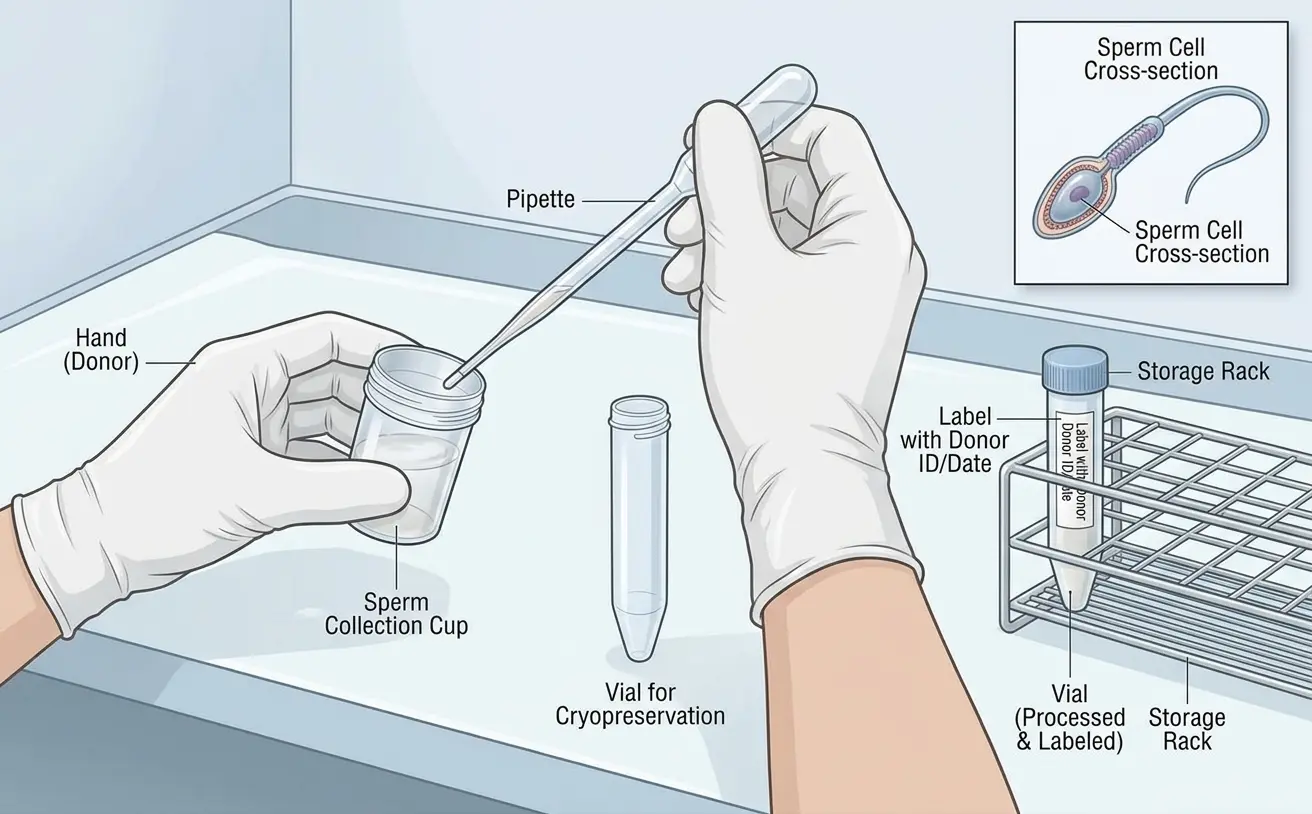
For a large part of our community, including women building a family on their own and female same-sex couples, getting pregnant doesn’t involve sex at all. It involves a limited number of donor sperm vials, and each one carries emotional and financial weight. The relaxed “every two or three days” advice simply doesn’t apply.
NICE is explicit about this: people using artificial insemination should have it timed around ovulation. Here’s why precision matters so much more in this situation.
Fewer chances, shorter windows
- One or two attempts per cycle. With intercourse, sperm is often already waiting when the egg arrives. With insemination, you’re placing sperm on one or two chosen occasions, so those occasions need to be close to ovulation.
- Frozen donor sperm makes precise timing more important. Donor sperm from a sperm bank is usually cryopreserved and thawed before use. Cryopreservation and thawing affect sperm motility and function, but an exact in-vivo survival time cannot be reliably assigned to an individual sample. In practice, because insemination uses a limited number of prepared sperm samples on selected occasions, timing close to ovulation matters more than it does with frequent intercourse.
- LH tests and clinic monitoring become central. Many clinics time intrauterine insemination (IUI) from the LH surge or from a trigger injection. The evidence does not support one universally exact hour for every protocol. In stimulated IUI cycles using hCG, the American Society for Reproductive Medicine recommends IUI within 0 to 36 hours relative to the trigger; natural-cycle insemination is commonly timed in relation to the detected LH surge according to the clinic’s protocol. Some clinics also use ultrasound to track follicular development when clinically appropriate.
If you’re planning insemination at home, talk to a fertility clinic or your sperm bank about timing for the type of sperm you’re using. If your cycles are irregular, or LH tests are hard to interpret, clinic monitoring for a cycle or two can save a lot of precious vials.
Known donors and home insemination: the legal trap
We’d be failing you if we didn’t raise this. Where and how you inseminate can decide who the law treats as your child’s parent.
In the UK, the fertility regulator, the HFEA, warns that if you’re single, or in a same-sex couple that isn’t married or in a civil partnership, and you inseminate outside a licensed clinic, the donor may be treated as the legal parent of any child, with rights and responsibilities. At a licensed clinic, the donor is not a legal parent, and a partner can be recognised as the second parent. The HFEA also warns that sperm from unregulated donors found online carries risks of infection and inherited conditions, and that no one should feel pressured into “natural insemination” with a stranger.
Parentage law differs widely between countries, and even between US states. Before you use a known donor or inseminate at home, it’s worth speaking to a specialist fertility lawyer about your own situation.
Our Single Parent Journey and Building LGBTQ+ Families courses cover these paths in depth, and our egg, sperm and embryo donation courses explain how donation, screening and donor anonymity work.
When your cycle is telling you something
Once you start paying attention, your cycle becomes a source of health information in its own right. Most variation is normal. Some patterns are worth raising with a doctor sooner rather than later:
- Cycles regularly shorter than 24 days or longer than 38 days, or a gap of more than 7 to 9 days between your shortest and longest cycles. FIGO recommends assessing people with infrequent or irregular cycles for an ovulatory disorder.
- No period for three months or more, if you’re not pregnant.
- LH tests that never show a surge over several cycles, or tests that are positive for days on end, which can point to PCOS.
- Very heavy or very painful periods, pain during sex, or bleeding between periods. These can be signs of conditions such as endometriosis or fibroids.
- A consistently short gap between ovulation and your period, if you’re tracking it. Your doctor can decide whether it needs investigating.
How long to try before seeking help
First, the reassuring part. NICE notes that over 80% of heterosexual couples in which the woman is under 40 conceive within a year of regular unprotected sex, and about half of the rest conceive in the second year.
General guidance suggests a fertility evaluation after 12 months of regular unprotected intercourse if the woman is under 35, and after six months if she is 35 or older. For women over 40, or when there is a known condition associated with infertility, more immediate evaluation may be appropriate. Don’t wait for these time limits if any of the patterns above apply to you, if either partner has a known fertility-related condition, or if you’re using donor sperm and several well-timed cycles haven’t worked.
What a first fertility check-up usually involves
An initial assessment is usually simpler than people fear. Depending on age, cycle history and clinical context, it may include assessment of ovulation, pelvic ultrasound, evaluation of tubal patency and semen analysis for a male partner. Ovarian reserve testing, such as AMH and antral follicle count, can be useful when clinically indicated and is particularly relevant when planning fertility treatment, but AMH is not a stand-alone test of whether someone can conceive naturally. If you’ve already been told your ovarian reserve is low, our guide on what to do after a low ovarian reserve diagnosis walks through the next steps.
If treatment becomes part of your path, it helps to know what’s ahead before your first appointment. Our course IVF: Everything You Need to Know explains each stage clearly, from the first tests to embryo transfer.
The emotional cost of watching your body
Understanding your cycle is empowering. It can also quietly take over your life.
Test strips lined up on the bathroom shelf. A thermometer on the bedside table. An app that asks how you feel every morning. Sex that starts to feel like an appointment. And then the two weeks between ovulation and your period, which people in fertility communities simply call “the two-week wait”, where every twinge gets analysed.
None of this means you’re doing it wrong. It means you care about the outcome. But it helps to put some boundaries around it:
- Track with a purpose. Once you know your pattern, you may not need to test every day, every cycle. Decide what you actually need to know, and stop there.
- Protect intimacy. Remember that the NICE advice of sex every two to three days works without any tracking. Taking a month off from testing is not “giving up”.
- Share the load. If one partner has become the researcher, the scheduler and the person who reads every test, say so. It’s easy for that to happen without anyone choosing it.
- Find people who understand. Friends and family often mean well and say the wrong thing. Talking to others who are living the same thing can make a real difference.
Our Mind & Body Preparations courses focus on exactly this: looking after yourself, emotionally and physically, while you try.
What we’d want you to take from this
Your fertile window is six days, and it rarely sits where the calendar puts it. The days just before ovulation matter most, and your body’s own signals, especially cervical mucus and the LH surge, are more reliable guides than any date.
Age doesn’t shrink the window, but it does lower the odds on each day within it, which is why understanding your cycle early is so valuable. Regular periods are reassuring but don’t prove ovulation, and irregular ones are a reason to ask questions, not to wait.
If you’re conceiving with donor sperm, timing becomes essential, and so does thinking about the legal side before you start.
And whatever your path, tracking should serve you, not run you. Knowledge is meant to take pressure off, not add to it.
Ready to go deeper?
This article is the starting point of our Natural Fertility Support hub, where we bring together educational content on cycle awareness, nutrition, lifestyle and emotional wellbeing, all shaped by specialists who understand both the science and how this journey feels.
With a Family By Choice membership, you get access to all our courses, live Q&A sessions with experts, and a community of people who know exactly where you are. You can learn at your own pace, from wherever you are, in six languages.
Reading this for your team rather than yourself? We also run family-forming education programmes for employers. Get in touch with our founders here.
This guide is provided for information and education. It is not medical advice, and it isn’t a substitute for a conversation with a qualified healthcare professional who knows your full history. Guidelines, laws and product evidence change over time and vary by country. Please check anything relevant to your situation before acting on it.
Author

Related articles
How to Know If You’re Fertile as a Man and Why There Usually Are No Signs
Endocrine Disruptors and Fertility in Men and Women: What the Science Actually Shows
Related courses
Online Course: Understanding Male Infertility | Family By Choice