

If donor eggs are part of your path to parenthood, you have likely come across the term egg bank, and wondered exactly what it means, how it works, and whether it is the right option for you.
You are not alone.
It is one of the most common questions intended parents have when they first begin researching their options.
This guide breaks it all down in plain language. We cover what egg banks are, how they operate step by step, how they differ from egg donor agencies or programs, the benefits and drawbacks of each, and, most importantly, how to choose a reputable egg bank and what warning signs to watch out for.
This is not medical advice.
Every fertility journey is personal, and working with a qualified fertility specialist is essential for decisions about your treatment.
But education matters too, because understanding your options helps you ask better questions and move forward with confidence.
What Is an Egg Bank?
An egg bank is a specialized medical facility that recruits egg donors, screens them thoroughly, retrieves their eggs, and stores those eggs in a frozen state, ready to be used by intended parents undergoing in vitro fertilization (IVF).
The simplest way to think about it is this: imagine a carefully curated, medically supervised library of donor eggs. Each egg in that library comes from a donor who has been through an extensive screening process – medical, genetic, and psychological. The eggs have been retrieved, frozen using advanced technology, and catalogued with detailed information about the donor.
When you are ready to begin treatment, you or your fertility consultant will browse a database of donor profiles, select a donor whose characteristics match your medical requirements and personal preferences, and work with your clinic to coordinate the next steps in your IVF cycle.
For many people, discovering that egg banks exist is a turning point. It means that the path to parenthood does not depend on finding a willing donor at exactly the right moment, synchronizing cycles, or waiting months or even years for availability. The eggs are already there, already screened, already frozen – and in many cases, they can be shipped to a clinic anywhere in the world.
Egg banks have existed in various forms since the early days of assisted reproduction, but for a long time, freezing eggs was technically difficult. Eggs are the largest cells in the human body and particularly vulnerable to damage during the freezing process. Early slow-freezing methods often resulted in poor egg survival rates, which limited the usefulness of egg banking significantly.
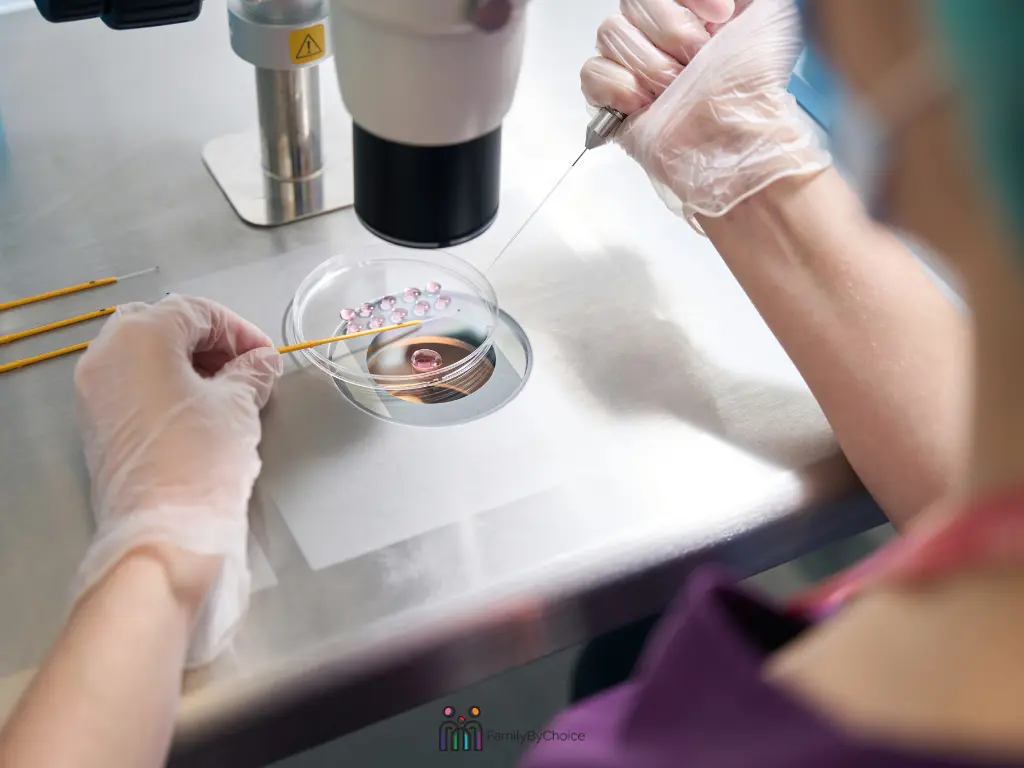
That changed with the development of vitrification, a rapid flash-freezing technique that cools eggs so quickly that ice crystals, which were the main source of cellular damage in older methods, simply do not have time to form. Vitrification transformed egg banking from a promising but inconsistent approach into a reliable, widely used clinical practice. Today, frozen eggs stored in an egg bank can achieve pregnancy rates per transfer comparable to fresh donor cycles for many patients, according to the ASRM evidence-based guidelines on donor oocyte cryopreservation.
It is worth noting that egg banks are not the only way to access donor eggs. There are also fresh donor programs and egg donor agencies, which we cover in detail later in this guide. But understanding what an egg bank is and how it works is a natural starting point, because for many intended parents, it will be the first option they encounter and, ultimately, the one they choose.
How Does an Egg Bank Work?
Understanding the process can make it feel far less overwhelming. Here is how a typical egg bank operates from start to finish.
Step 1: Donor Recruitment
Egg banks actively recruit donors who meet specific health and age criteria. Most egg donors are between 21 and 32 years old, as egg quality and quantity can be higher in younger donors. Donors may be compensated for their time, effort, and the medical process involved, though regulations around compensation vary significantly by country and related laws.
Step 2: Comprehensive Screening
This is one of the most important stages, and a rigorous screening process is a hallmark of a trustworthy egg bank. Screening typically includes:
- A full medical history and physical examination
- Blood tests for infectious diseases (including HIV, hepatitis B and C, and others)
- Genetic carrier screening: testing for hereditary conditions that could be passed to a child
- Hormone testing to assess ovarian reserve and the likely response to stimulation
- Psychological evaluation to assess emotional readiness and understanding of the donation process
Only donors who pass all screening criteria are accepted into the program. Reputable egg banks follow internationally recognised standards for donor care, informed consent, and information provision, guidance that organisations such as the European Society of Human Reproduction and Embryology (ESHRE) have formalised in their good practice recommendations for reproductive donation.
Step 3: Ovarian Stimulation and Egg Retrieval
Once accepted, the donor undergoes a monitored stimulation cycle. She receives hormone injections over approximately 10–14 days to stimulate her ovaries to produce multiple eggs. The process is carefully monitored through blood tests and ultrasound scans.
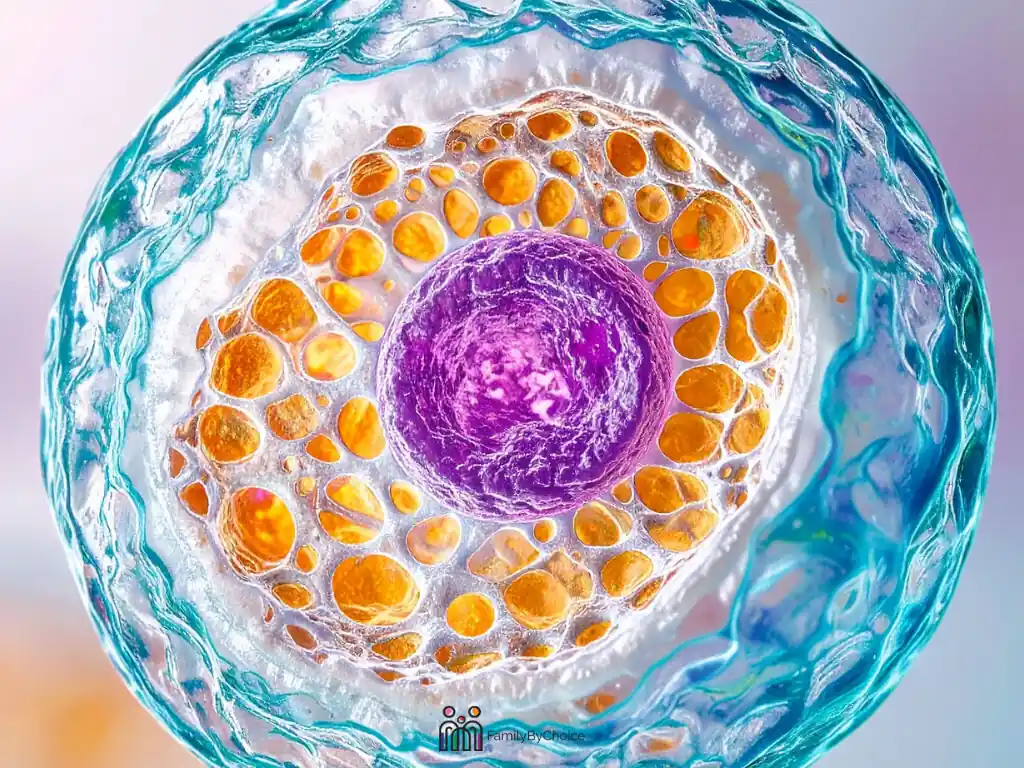
When the eggs are ready, they are retrieved through a minor outpatient procedure carried out under sedation. The procedure itself takes around 20–30 minutes, and donors typically recover within a day or two.
Step 4: Vitrification – Freezing the Eggs
Immediately after retrieval, the eggs are frozen using vitrification. This ultra-rapid freezing technique prevents ice crystals from forming inside the egg, which was a major limitation of older slow-freezing methods. A Cochrane systematic review on oocyte vitrification versus slow freezing found significantly higher egg survival rates and clinical pregnancy rates with vitrification compared to earlier freezing protocols.
The frozen eggs are then stored in liquid nitrogen tanks at −196°C, where they can remain viable for many years.
Read more on fresh vs. frozen donor eggs here.
Step 5: Donor Matching
When you are ready to proceed, you will browse the egg bank’s donor database. Profiles typically include:
- Physical characteristics (height, eye colour, hair colour, skin tone, build)
- Medical and genetic history
- Educational background and personal interests
- In some cases, childhood photos or personal essays written by the donor
Matching is guided by medical compatibility, including blood type, and by your personal preferences. Egg banks handle the legal paperwork between themselves and the donor, and you sign a separate agreement with the egg bank when you select your donor.
One question many intended parents have at this stage is: what are the donor’s parental rights? The honest answer is that it depends on the type of donation, the country where the egg bank operates, and the legal framework in place.
In anonymous donation through a well-regulated egg bank, donors typically relinquish all parental rights as part of the donation agreement, either through a legal contract, by operation of national law, or both. In these arrangements, the donor has no legal claim to any child born from their eggs, and the intended parents are recognised as the legal parents from the outset. This is the most common structure in established egg bank programs.
However, in known or open-ID donation, where the donor’s identity is disclosed to the recipient or to the donor-conceived child at a later stage, the legal situation becomes more nuanced. Some countries allow open-ID donation while still clearly protecting the intended parents’ legal parenthood. In others, the legal boundaries are less clearly defined, and additional legal steps may be required to fully establish parental rights.
It is also important to understand that not all jurisdictions treat contracts the same way. In some countries, a signed donation agreement is fully enforceable and completely severs any legal connection between the donor and the child. In others, no private contract can override parental rights established by law, meaning that even if a donor has signed an agreement waiving rights, a court could theoretically still recognise a legal relationship in certain circumstances. This is rare in well-regulated systems, but it is a real consideration in countries with less mature legal frameworks around egg donation.
Finally, standards vary significantly between egg banks. A bank operating in a country with strong, clear legislation around donor conception will have robust legal documentation as a matter of course. A bank in a country with limited or ambiguous regulation may not offer the same level of legal protection, and this is something you may not be able to assess from a donor profile or website alone.
This is precisely why working with an independent fertility lawyer, one who is familiar with the laws of the country where the egg bank operates, the country where your clinic is based, and your home country, is not a precaution, but a necessity.
Step 6: Thawing, Fertilization, and Embryo Transfer
Once you have chosen a donor and your clinic has coordinated logistics, the frozen eggs are carefully thawed. Not every egg will survive the thaw. Survival rates vary by bank and laboratory, but good-quality programs typically report survival rates of around 80% or higher.
The surviving eggs are then fertilized with sperm from your partner or a sperm donor using IVF. The resulting embryos are monitored for several days, and the strongest embryo is transferred to the uterus. Additional viable embryos can be frozen for future attempts.
Egg Bank vs. Egg Donor Agency (or Program): What Is the Difference?
These two terms are often confused, and understandably so, because both involve finding an egg donor. But the process, timing, and experience are quite different.
The Egg Bank Model (Frozen Eggs)
With an egg bank, the eggs have already been retrieved and frozen before you even begin your search. You are choosing from an existing inventory. This means:
- Faster treatment timelines, no waiting for a donor’s retrieval cycle
- More flexibility in scheduling your IVF treatment
- Eggs can be shipped to clinics internationally
- The donor has already completed her part before you are ever matched
The Egg Donor Agency / Fresh Cycle Model
With a donor agency or fresh cycle program, you are matched with a donor who has not yet gone through retrieval. The process is coordinated specifically for you. This means:
- The donor’s cycle is synchronized with your own treatment cycle
- You typically receive all of that donor’s eggs, not a portion of them
- Fresh eggs do not go through the freeze-thaw process
- The process usually takes longer and requires more coordination
Pros and Cons at a Glance
| Egg Bank: AdvantagesAvailable immediately, no waiting for donor availabilityMore predictable treatment timelinesWide selection from diverse global donor poolsEggs can be shipped internationallyOften more cost-effective overallDonor has already been screened and cleared | Egg Bank: ConsiderationsNot all eggs survive the thaw (survival rates vary)You typically receive a cohort (set number), not all eggsLess personalised matching in some programs No opportunity for a relationship with the donor in most casesVariability in quality standards between banks |
| Egg Donor Agency / Fresh Cycle: AdvantagesAll retrieved eggs go to one recipientNo freeze-thaw process involvedCan allow for more personalised donor matching Some programs allow open or semi-open donation | Egg Donor Agency / Fresh Cycle: ConsiderationsLonger wait times, often 3–12+ monthsCycles must be synchronised between donor and recipientMore logistically complex, especially across bordersDonor could withdraw before retrievalTypically higher total cost |
Which is right for you?
There is no universal answer. It depends on your timeline, budget, medical situation, and personal values.
Who Uses Egg Banks?
Egg banks serve a wide range of intended parents, and the reasons people turn to donor eggs are more varied than many realise. You may be considering donor eggs if you are:
Facing age-related egg quality decline
Egg quality and quantity naturally diminish with age, particularly from the mid-thirties onwards. Because the age of the egg, not the age of the person carrying the pregnancy, is the primary factor in many outcomes, donor eggs from younger donors can significantly improve IVF success rates.
Diagnosed with diminished ovarian reserve (DOR)
This is a condition where the ovaries contain fewer eggs than expected for a person’s age. It can affect people in their twenties and thirties, not only those approaching menopause, and is usually identified through AMH blood tests and ultrasound.

Experiencing premature ovarian insufficiency (POI)
Sometimes called early menopause, POI means the ovaries stop functioning normally before age forty. It can be caused by genetic factors, autoimmune conditions, or have no identifiable cause, and donor eggs are typically the recommended route to pregnancy for those who wish to carry a child.
Affected by cancer treatment
Chemotherapy and radiation, particularly when directed near the pelvic area, can cause significant or permanent damage to the ovaries. Many cancer survivors find that donor eggs are their most realistic path to pregnancy after treatment.
Having had ovaries surgically removed
Whether due to cancer, high genetic risk (such as BRCA carriers), severe endometriosis, or other medical reasons, people who have had both ovaries removed will need donor eggs to achieve pregnancy.
Carrying a serious genetic condition
If one or both intended parents carry an inherited condition, such as cystic fibrosis or certain chromosomal abnormalities, donor eggs can significantly reduce the risk of passing it on. A genetic counsellor can help you understand your specific situation and options.
Experiencing recurrent pregnancy loss
Where multiple miscarriages have no clearly identified cause, egg quality may be a contributing factor. In these cases, donor eggs are sometimes recommended as part of the next stage of treatment.
Having had repeated IVF failure with own eggs
When multiple cycles have not resulted in a successful pregnancy despite good stimulation and fertilisation, switching to donor eggs is a clinical decision based on evidence, not a failure.
Born with a condition affecting ovarian development
Conditions such as Turner syndrome or Swyer syndrome can mean some people are born without functional ovaries. For these individuals, donor eggs are simply the path to pregnancy from the start.
Also,
- A single woman by choice whose own eggs are not viable, using donor eggs in combination with donor or known sperm.
- A single man or same-sex male couple pursuing parenthood through surrogacy. For this group, donor eggs and a gestational surrogate are both essential parts of the journey.
- A same-sex female couple pursuing reciprocal IVF, where one partner provides the eggs and the other carries the pregnancy, a form of egg donation that is deeply personal and increasingly common.
- A postmenopausal woman wishing to carry a pregnancy. This is legally and clinically permitted in some countries, using donor eggs combined with appropriate uterine preparation. Regulations vary significantly, so legal and medical guidance is essential.
Whatever brings you to this point, know this: using donor eggs is a valid, well-established path to parenthood. It is not a compromise or a last resort. It is a deliberate, informed choice. Many thousands of families around the world have been built this way, and all of them began exactly where you are now.
Legal and Ethical Considerations
Egg donation laws vary significantly from country to country. This is one of the most important things to understand before you begin, because where you receive treatment may be determined, in part, by the legal framework in that country.
Key Legal Areas to Understand
Donor anonymity vs. known donation: Some countries require anonymous donation by law. Others allow or even require the option of identity disclosure when donor-conceived children reach adulthood. This has significant implications for your child’s future access to information about their genetic origins.
Parental rights: In most jurisdictions, the egg donor relinquishes all parental rights at the point of donation. Legal contracts make this explicit. However, the specific legal protections vary by country, so legal advice is essential.

Compensation regulations: Some countries permit financial compensation for donors beyond expense reimbursement; others allow only altruistic donation. This affects donor availability and waiting times depending on where you seek treatment.
Number of families per donor: Many countries limit how many families can be created from a single donor’s eggs, to reduce the risk of donor-conceived half-siblings unknowingly meeting in later life.
Our Recommendation
- Before choosing a clinic or egg bank in another country, consult with a fertility lawyer who specialises in the laws of that specific jurisdiction.
- Understand your rights, the donor’s rights, and, importantly, your future child’s rights before you proceed.
- If you are using an international egg bank, also verify that the eggs can be legally imported into your country of treatment.
Ethical Considerations
Beyond the legal side, many intended parents also think deeply about the ethical dimensions of egg donation. Questions worth reflecting on include:
- Will you tell your child about their genetic origins? Research consistently supports the value of age-appropriate honesty with donor-conceived children.
- Do you want the option of future contact with the donor? Some programs offer open-ID arrangements where this is possible.
- How are donors treated? A reputable program genuinely cares for donor wellbeing, not just the outcome for recipients.
How to Choose the Right Egg Bank: What to Look For
This is perhaps the most practical section of this guide, because not all egg banks are equal. Here is what to look for, and what to be cautious about.
Signs of a High-Quality Egg Bank
1. Transparent and Rigorous Donor Screening
A reputable egg bank will be completely open about their screening protocols. They should be able to tell you exactly what tests donors undergo, what genetic screening panels are used, and how results are communicated to intended parents. If they are vague or evasive, that is a red flag.
2. Clear, Honest Success Rate Data
Success rates matter, but how they are presented matters just as much. Look for egg banks that report:
- Live birth rates (not just clinical pregnancy rates)
- Egg survival rates after thawing
- Fertilization rates
- How data is collected and verified
Be cautious of banks that only quote the most favourable numbers without explaining context.
3. Access to Genetic Counselling
Genetic screening results can be complex to interpret. A good egg bank will either offer access to a certified genetic counsellor or be able to direct you to one. You should never be left to interpret genetic data alone. The American College of Medical Genetics and Genomics provides guidance on what comprehensive genetic counselling should include.
4. Diverse and Well-Documented Donor Profiles
You should have access to detailed donor profiles including medical history, genetic screening results, physical characteristics, and personal background. The more information available, the more informed your decision can be.
5. International Experience and Logistics Support
If you are seeking treatment in a different country from where you live (which is very common with egg banks), the bank should have experience coordinating international shipments, working with clinics across multiple countries, and navigating cross-border logistics.
6. Clear Legal Frameworks and Contracts
The bank should clearly explain the legal status of donation in their operating country, provide proper contracts that protect all parties, and ideally recommend that you seek independent legal advice.
7. Genuine Donor Care
A quality egg bank treats donors as people, not just sources of eggs. Look for evidence that donors receive proper medical follow-up, psychological support, and fair treatment throughout the process. Donor wellbeing is inseparable from ethical practice.
Red Flags: What to Watch Out For
Be cautious of an egg bank…
- Cannot clearly explain their donor screening process, or is secretive about it
- Publishes unusually high success rates without supporting data or context
- Has very limited donor profiles or minimal medical information on donors
- Applies significant pressure to make a quick decision or pay upfront fees without clear contracts
- Cannot provide references, testimonials, or verifiable track record
- Does not mention legal considerations at all, or dismisses them as unimportant
- Has poor communication, slow to respond, unclear answers, or inconsistent information
- Offers prices that seem dramatically lower than the market rate with no clear explanation
- Does not have a clear process for what happens if eggs do not survive thawing
Questions to Ask an Egg Bank Before You Commit
Use these questions in your initial conversations with any egg bank you are evaluating:
- What genetic screening do all donors undergo, and what panel is used?
- What are your egg survival rates after thawing, and how is that data tracked?
- What happens if fewer eggs than expected survive the thaw?
- Do you offer access to genetic counselling?
- How is matching done? What criteria are used and what input do I have?
- What is the full cost breakdown, including shipping, thawing, and any additional fees?
- In which country do you operate, and what are the relevant donation laws there?
- Is donor identity disclosure possible now or in the future?
- What accreditations or certifications does your laboratory hold?
- Can you connect me with intended parents who have used your services?
Egg Banks and International Fertility Treatment
One of the most significant advantages of egg banks is that they make international fertility treatment much more accessible. Frozen eggs can be transported safely to clinics around the world, which means your choice of egg bank does not have to be limited to your home country, and your choice of clinic does not need to be in the same country as the egg bank.
This is particularly relevant for intended parents who live in countries with restrictive donation laws, where donor availability is limited, or where certain family-building paths are not legally permitted.
If you are considering treatment abroad, be sure to research both the laws in the country where the egg bank operates and the laws in your home country, particularly around legal parentage, citizenship, and the rights of donor-conceived children.
This is an area where working with an international fertility lawyer is not optional, it is essential.
Final Thoughts: Knowledge Is Your Greatest Tool
Egg banks have made donor egg IVF more accessible, flexible, and predictable than ever before. For many intended parents, whether they are facing medical challenges, building LGBTQ+ families, or choosing single parenthood. They represent a genuinely life-changing option.
But the quality and standards of egg banks vary enormously. The difference between a well-run, ethical, medically rigorous program and one that cuts corners can have real consequences – for your experience, your safety, and your outcomes.
Take your time.
Ask hard questions.
Seek legal advice.
Work with a fertility specialist you trust.
And remember: being well-informed does not make the journey less emotional, but it does give you the best possible foundation to navigate it.
Want to Learn More?
If you are exploring donor egg IVF or any other path to parenthood, our IVF expert-led courses are designed to give you clear, medically reviewed information at your own pace.
From understanding IVF to navigating the legal side of surrogacy, we cover the topics that matter, so you can move from overwhelm to informed action.
Explore our membership options and join a community of intended parents who are on this journey alongside you.
The information in this article is for educational purposes only and does not constitute medical or legal advice. Fertility treatment is highly individual. Always consult a qualified fertility specialist, genetic counsellor, and, where applicable, a fertility lawyer before making decisions about your treatment.
Author